
Laser surface texturing: give your surfaces specific functional properties
Modifying tribology (friction/sliding), wettability or the reflectivity of a surface, aesthetic effects: IREPA LASER structures your surfaces at micrometre scale by laser, without contact, on all your materials.
Changing the properties of a surface without changing the material
The surface of a part is not merely a geometric boundary. It is where adhesion between two components, the friction coefficient in a tribological contact, the wettability of a liquid, the reflectivity of a light beam or the bonding of a coating are determined.
Yet the properties of a surface depend directly on its topography: the size, shape, depth and distribution of the micro- and nano-structures it is made of. Laser texturing modifies this topography precisely, reproducibly and locally, without adding material or chemicals.
The laser creates micro-structures on the surface by ablation: it removes material at micrometre scale according to a digitally programmed pattern. The geometry of these structures (width, periodicity, depth, orientation) directly determines the functional property obtained. Changing the pattern parameters means changing the surface property.
IREPA LASER develops these laser texturing processes for industries that need to control the properties of their surfaces.
The materials we texture
Laser texturing is compatible with the vast majority of materials. Here are the material families we process and their specific features:
- Metals and alloys: steel, stainless steel, aluminium, titanium, nickel, copper and alloys. Texturing creates micro-reliefs without distortion or alteration of the mechanical properties of the substrate.
- Technical polymers: PEEK, PC, PMMA, PA and other thermoplastics. Texturing polymers requires precise energy control to avoid carbonisation or melting of the matrix. UV and femtosecond lasers are generally preferred.
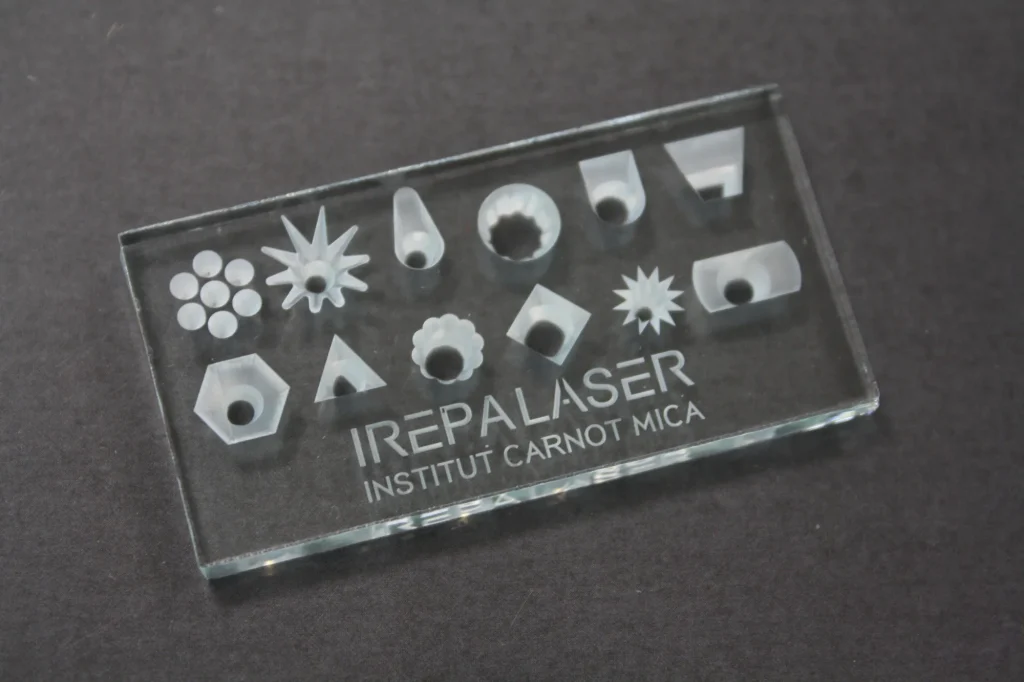
- Ceramics and glass : hard, brittle materials. Laser texturing creates micro-structures without cracking provided the parameters are correctly adapted.
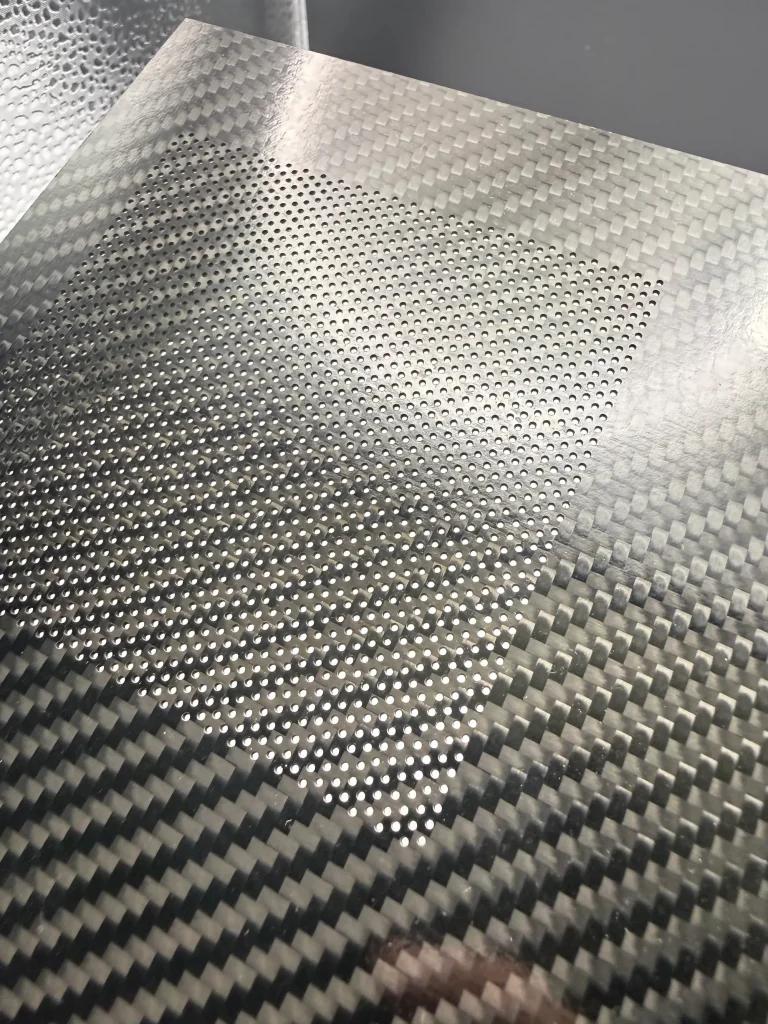
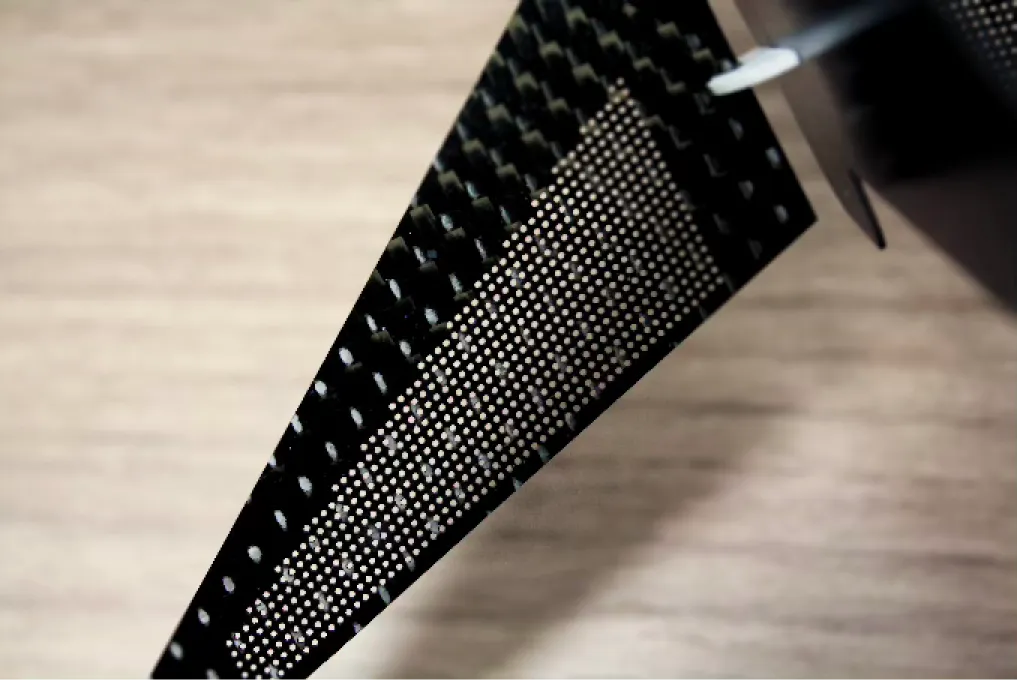
- Composites (CFRP, CMC…): CFRP and hybrid materials. Texturing composites requires controlling the laser interaction with the matrix and the fibres separately to avoid selective degradation of either.
We fine-tune the parameters for each material to guarantee controlled texturing and high-performance functionalisation.
The functional properties we create
Laser texturing makes it possible to modify surface properties in a range of areas.
Control of friction and tribological properties.
Surface texturing creates micro-pockets or micro-reliefs that modify the tribological behaviour of the surface. Depending on the pattern chosen, it is possible to reduce friction (improved hydrodynamic lubrication), increase friction between two surfaces (preventing slip, torque transmission) or reduce wear.
Applications: bearings, sliding parts, tooling, engine cylinders
Wettability modification (hydrophobicity, superhydrophobicity, hydrophilicity)
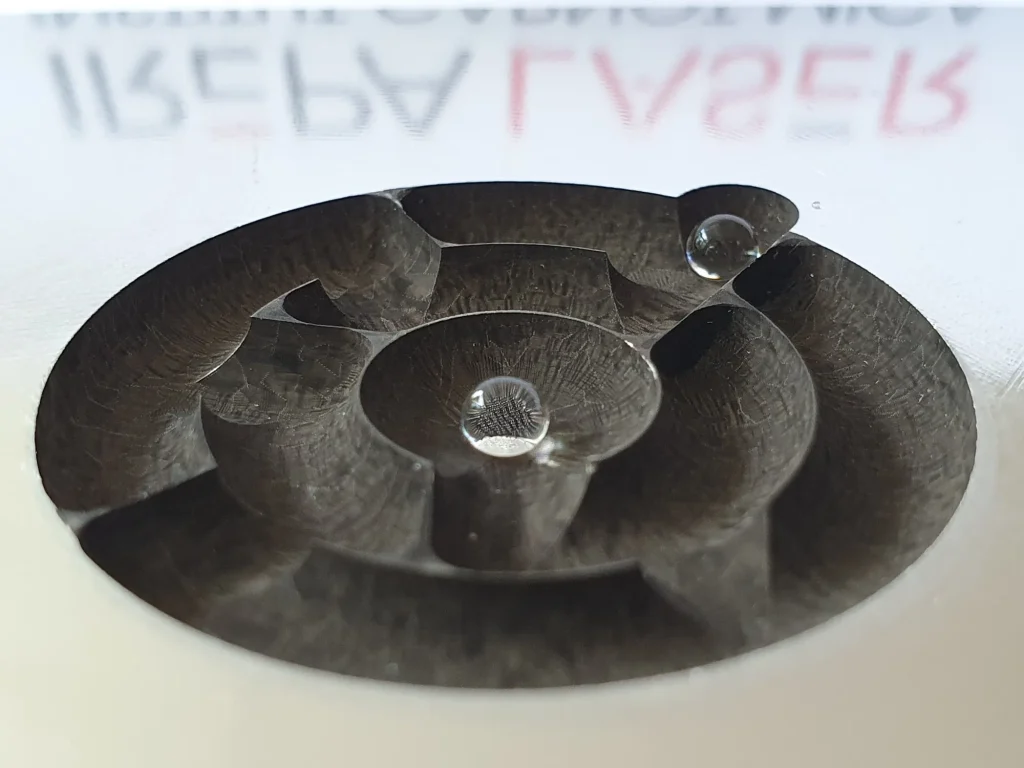
Structuring at micro and nano scale creates surfaces with controlled wettability. Specific textures produce the lotus effect (contact angle above 150°, rolling droplets). Others, by contrast, promote the spreading of liquids (hydrophilicity).
Applications: self-cleaning surfaces, anti-icing systems, microfluidics, heat exchangers.
Improving adhesion
A surface textured before bonding or overmoulding offers better mechanical keying for adhesives and polymers.
Applications: surface preparation before structural bonding, metal-polymer joining, multi-material hybrids.
Optical properties
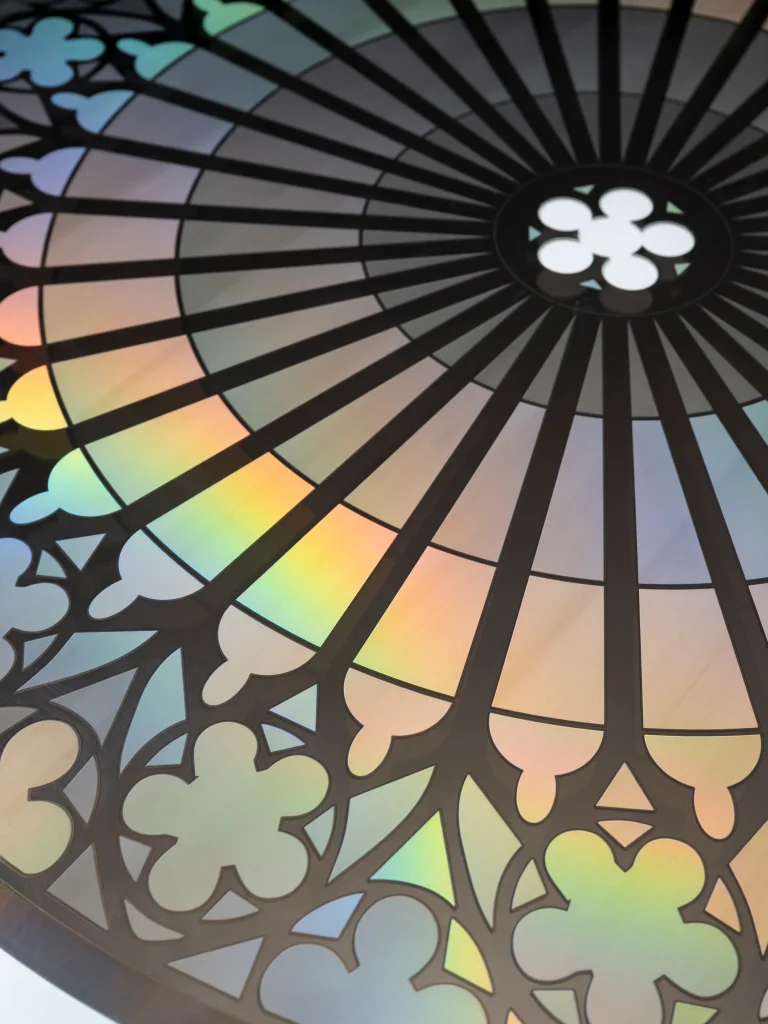
Sub-micrometre textures create iridescent or anti-reflective effects.
Applications: anti-reflective surfaces for optics, solar panels, photonic components, decorative structural colour effects for watchmaking and luxury goods.
Decorative and aesthetic effects
Laser texturing creates high-precision material effects on metal or polymer surfaces: satin, brushed, frosted, textured, engraved.
Applications: watch cases, jewellery, electronic device components, premium automotive.
Our achievements in laser machining
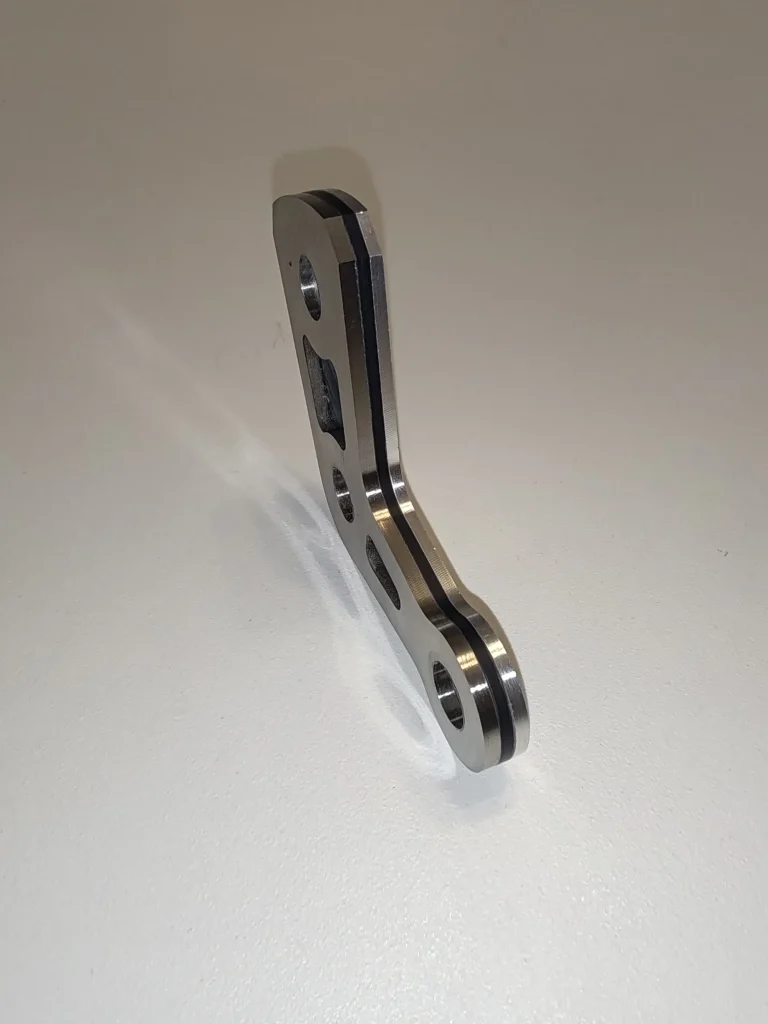
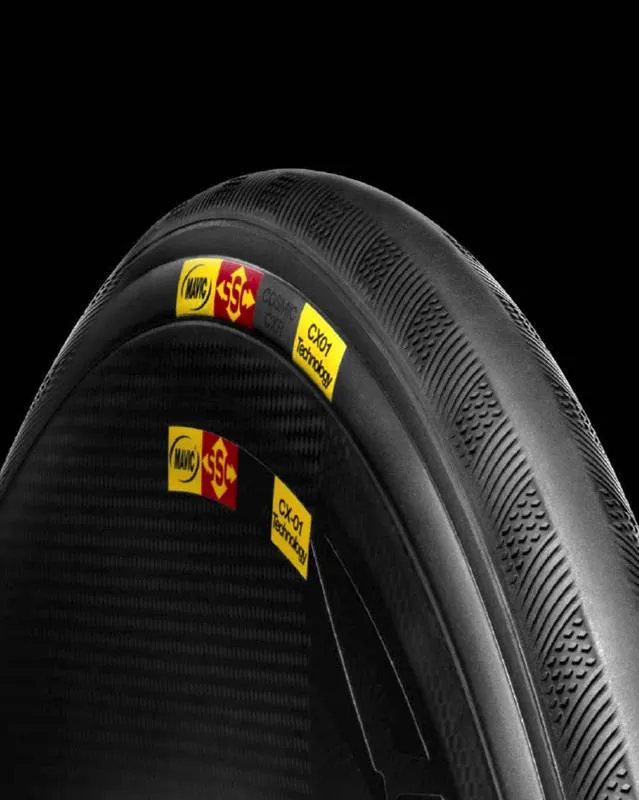
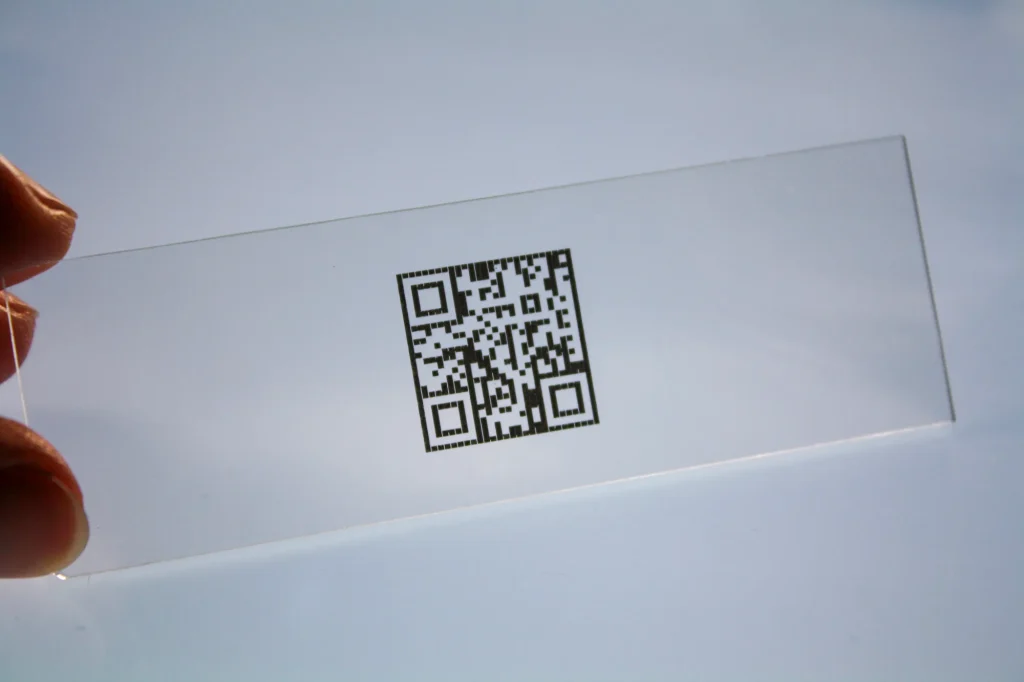
Superhydrophobic surfaces for aerospace anti-icing systems, tribological textures for friction reduction, material effects for watchmaking, surface structuring to improve adhesion before bonding: this is how our laser machining processes transform our customers' surface performance.
Comprehensive support for your texturing projects
Every texturing project begins with a precise definition of the surface property to be achieved. Here is our typical process.
Feasibility study and choice of laser parameters
Development and optimisation of patterns and textures
Trials and prototypes on real parts
Industrialisation and process transfer
Quality control and surface validation
Training in laser machining
The new generation of pulsed lasers delivers performance that can position laser engraving strongly against traditional tools. Many applications are already operational in industry, notably in watchmaking and even in the manufacture of injection moulds or dies.
Our training courses enable you to:
- Be able to adapt settings according to the laser technology.
- Apply the basic principles of laser engraving and micro-machining.
- Master the influence of operating parameters.
- Acquire a process optimisation methodology.
Our training course aims to give you the skills to set up and optimise your engraving or micro-machining processes.
Your questions about laser texturing
A process that modifies relief and roughness to impart functional or aesthetic properties.
Metals, polymers, ceramics, composites, glass…
2D and 3D patterns, micro-structures, functional or decorative textures.
Yes, with guaranteed repeatability and quality control.
Improved friction, adhesion, wettability, optical and thermal properties, while preserving the material.
Laser texturing allows the surface of your components to be precisely adapted to their functions: reduced friction, better adhesion, optimised wettability, light or heat management, and protection against wear or corrosion. Each modification is made without altering the internal properties of the material, ensuring greater performance and a longer service life for your parts in your specific industrial conditions.