Laser DED additive manufacturing: repair, optimise and produce your metal parts
Extend the service life of your equipment and manufacture your parts more efficiently: laser DED additive manufacturing addresses both of these industrial challenges.
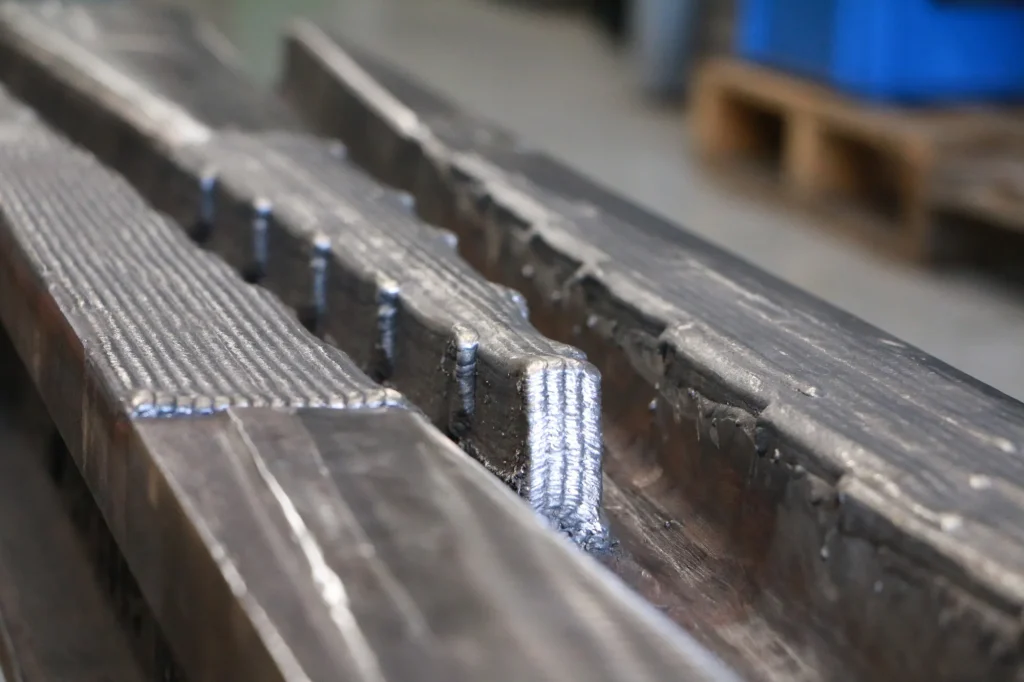
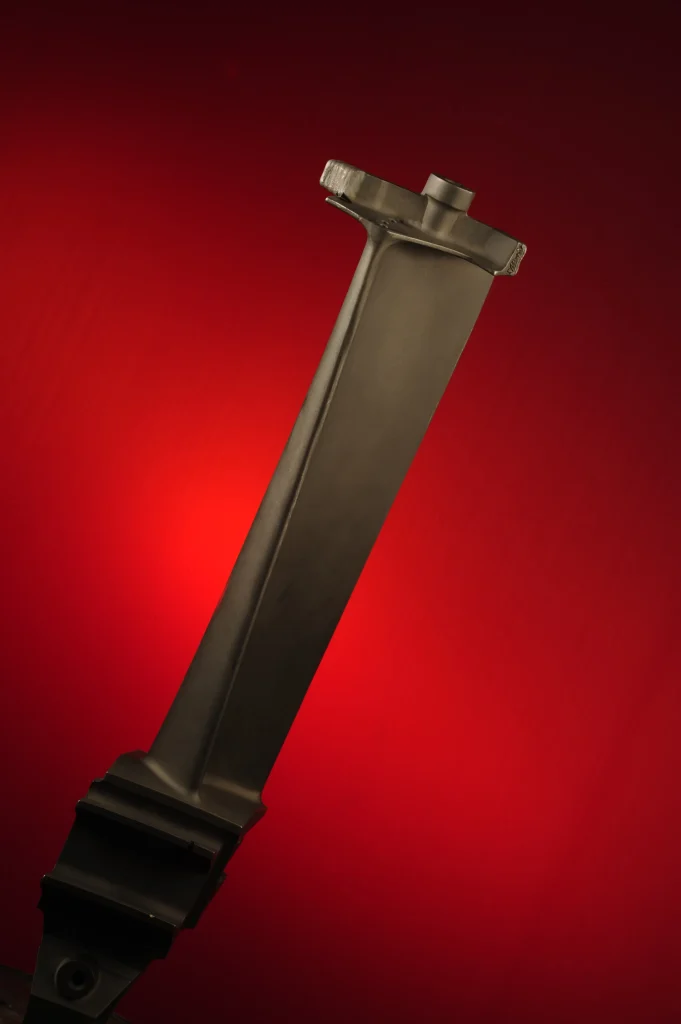
To protect your equipment against wear, corrosion or mechanical stress, laser DED additive manufacturing makes it possible to repair, clad and reinforce stressed or exposed areas, both preventively and correctively.
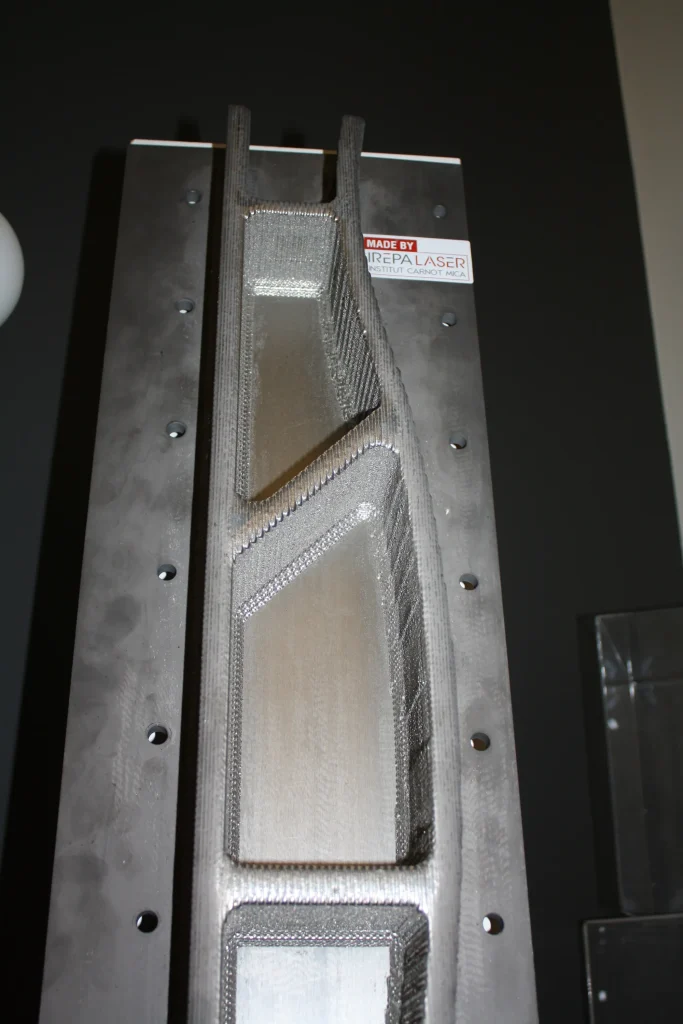
For manufacturing new parts, depositing material as close as possible to the final geometry reduces lead times and the amount of material to be machined, particularly when producing near-net-shape blanks for machining.
What do you need?
From repair to blank production, every industrial need calls for a tailored response. Identify your objective and discover our expertise.
Repair
Repair rather than replace. Restore your damaged parts and extend their service life.
Laser cladding & stelliting
Better, longer-lasting protection
Reinforce surfaces exposed to wear, corrosion and stress.
Part manufacturing
Produce faster with less material
Deposit material as close as possible to the final geometry and reduce machining operations.
Our laser DED additive manufacturing services
From idea to industrialisation, we turn your industrial challenges into practical solutions. Feasibility, process development, trials, prototypes, production, transfer and training: our teams support you until you have mastered the solution.
Feasibility study and advice on your needs
Development and optimisation of laser DED parameters
Trials and prototypes
Production of one-off parts or small batches
Industrialisation and transfer
Training
Laser DED additive manufacturing, explained
What if you could add material only where it is needed? Laser DED (Direct Energy Deposition) melts and deposits metallic material by laser, layer after layer.
This approach makes it possible to restore a damaged part, reinforce a stressed surface or manufacture a part, with precise control over where and how material is added.
At IREPA LASER, we use both wire laser DED and powder laser DED to adapt the process to each project. Volume of material to be deposited, required precision, material, geometry, expected performance: we define the most suitable solution with you and support you through to industrial implementation.
Industrialisation, know-how transfer, production of one-off parts or small batches: our expertise takes you from idea to a solution you can actually put to use.
What additive manufacturing changes for you
- Extend the service life of your equipment by repairing or reinforcing the most heavily stressed areas.
- Avoid replacing costly parts and reduce resupply lead times.
- Manufacture faster by depositing material as close as possible to the final geometry.
- Reduce material consumption and machining times thanks to near-net-shape manufacturing.
- Produce on demand, from one-off parts to small batches, without dedicated tooling.
- Match materials to the required functions, in particular to improve wear or corrosion resistance.
- Move from R&D to industry with support ranging from process development to industrialisation, transfer and production start-up.
The process is not enough: metallurgy makes the difference
In laser DED additive manufacturing, a part's performance does not depend solely on mastering the machine. Microstructure, residual stresses, dilution with the substrate and final mechanical properties: every parameter must be controlled to guarantee the quality and reliability of the deposit.
Our metallurgical expertise allows us to adapt the process to the material and to the requirements of your application.
We work with a wide range of industrial materials:
Stainless steels and engineering steels,
Titanium alloys,
Nickel-based alloys such as Inconel,
Aluminium alloys
Tool steels,
Cobalt-based alloys such as Stellite,
The sectors we support
Our additive manufacturing solutions meet the challenges of industries where component performance, availability and service life are critical. From repair to part manufacturing, we adapt processes and materials to the specific requirements of each sector.

Aerospace & Space
Repair, manufacture or upgrade high-value components with demanding performance and reliability requirements.

Energy & nuclear
Extend component service life, repair critical parts and secure their long-term availability.

Automotive & transport
Repair, manufacture or upgrade components and tooling to meet performance, cost and lead-time challenges

Mechanical engineering and tooling
Repair, modify or manufacture parts and tooling to reduce costs, lead times and production downtime.

Defence
Repair and manufacture critical parts to keep equipment in service and secure supplies

Naval
Repair, clad or manufacture heavily stressed components to extend their service life and limit downtime.
Train your teams in laser DED additive manufacturing
Mastering laser DED requires an understanding of the process, the materials and the associated design principles.
Our training courses combine technical expertise, theory and hands-on practice on industrial case studies, enabling your teams to rapidly develop skills that can be applied directly to your projects
Your questions about additive manufacturing
Laser DED (Directed Energy Deposition) is an additive manufacturing process that melts and deposits metallic material, layer by layer, using a laser beam. It can be used to repair, clad, modify or manufacture metal parts, using wire or powder depending on the application.
We process stainless and engineering steels, titanium alloys, nickel-based alloys, aluminium alloys, tool steels and Stellite-type cobalt-based alloys. Other materials can be investigated depending on your project requirements.
Repair restores the dimensions of a damaged, degraded or worn part while preserving its mechanical properties and functions. Cladding deposits a suitable material to improve a part's performance, in particular its resistance to wear, corrosion or temperature. Cladding can be preventive or corrective.
Yes, thanks to a multidisciplinary approach combining laser process control, metallurgy, deposition strategies and alloy selection. We adapt these parameters to the requirements of each application in order to control the properties of the deposit and its interaction with the existing material.
We can support you at every stage of your project, from feasibility study to industrial transfer. Our objective remains the same: to turn a process under development into a fully controlled industrial solution, whether for a trial, a prototype, parts production or industrialisation and transfer to your teams.
Let's talk about your part
Repair, cladding or part manufacturing: tell us about your needs, constraints and objectives. Together, we will identify the most suitable solution and the conditions for its industrial implementation.