
Laser welding: strengthening process control to improve quality and productivity
In the energy sector, manufacturers must simultaneously improve the performance of their components, control their costs and reduce production losses.
In this context, laser welding is a particularly attractive technology for producing precise, fast joints. But its performance depends on one essential condition: control of the process and of the parameters that determine weld quality.
Reducing defects, making production more reliable
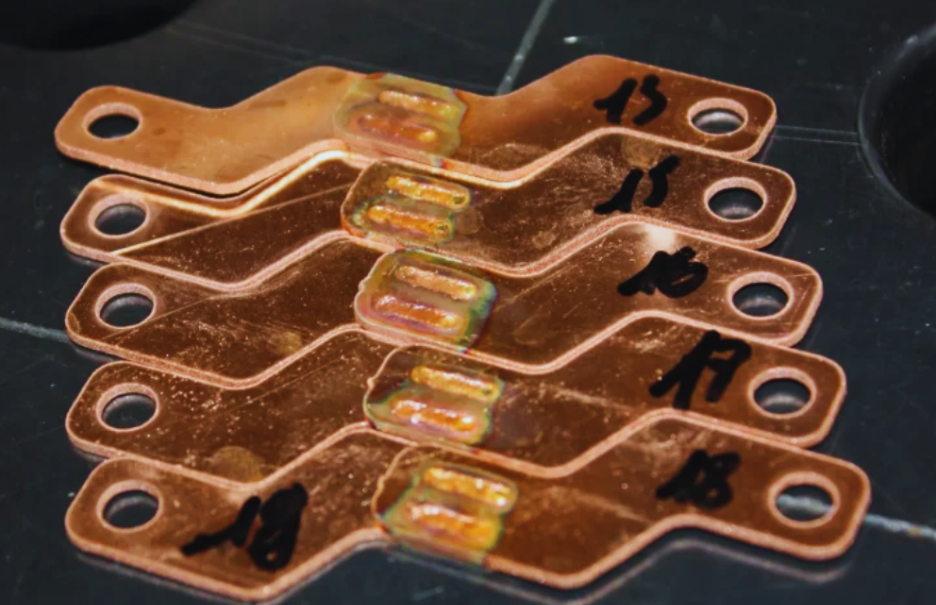
Laser welding meets many requirements for joining metallic materials, particularly for components made of carbon steel, stainless steel, copper or aluminium, which are widely used in the energy sector.
However, moving from technological potential to robust production requires an understanding of the entire chain: laser technologies, optics, laser-material interaction, operating parameters, weld joint design and quality control.
Incorrect settings can quickly result in a joining defect, rework or a rejected part. Conversely, a team that masters the process parameters can identify the source of a problem more quickly and respond appropriately.
That is what upskilling teams is all about.
Understanding to set and optimise more effectively
The metal laser welding training offered by IREPA LASER combines theory and practice to enable professionals to understand how the process works and acquire a genuine working methodology.
Participants cover in particular the influence of operating parameters, power, speed, focal position, beam shaping and beam quality. Hands-on sessions on machines then allow them to put this knowledge to the test in real-world situations.
The training also covers metallurgy, quality control, and beam and process monitoring. The aim: not just knowing how to produce a weld, but understanding why it complies - or why it does not.
This combination of theory and practice is also highlighted by Thomas Hautier, Deputy R&T Manager at Axon' Cable, who has attended several training courses. He particularly values “the quality of the training, both theoretical and practical, as well as the expertise of the various trainers”.
For him, the training above all brought a “better understanding of the phenomena involved in laser welding ”, providing the knowledge needed to grasp the process as a whole.
Turning skills into industrial autonomy
For methods, industrialisation and production teams, or operators of automated machines, this mastery is a genuine performance lever.
It enables them to take a more active part in trials, identify the key parameters, choose suitable peripheral equipment and respond to a joining defect.
This upskilling can also strengthen the role of technical teams in providing day-to-day support. Thomas Hautier explains that the knowledge he acquired enabled him to “better support the people working on laser welding”.
The aim of the training therefore goes beyond simply acquiring technical knowledge: it is also about giving professionals greater perspective and confidence to support their teams and play a more effective part in addressing process-related issues.
The training pathway can also support higher qualification, with access to the grade of Laser Welding Technologist, followed by the Specialist and Expert levels depending on the specialisations completed.
Training that reflects industrial reality
At IREPA LASER, training draws directly on the expertise developed every day on industrial processes. Hands-on sessions take place on real industrial laser equipment, under conditions close to those encountered in production.
This closeness to industrial reality is also reflected in the experience of Thomas Hautier, who highlights the complementarity between theory and practice, but also “the good fortune of being able to attend training delivered by passionate people”. He also appreciates the quality of the welcome, which helps make the training a time for learning and exchange with experts in the field.
And when the catalogue does not exactly meet the need, the programme can be tailor-made: more than 60 % of training courses are developed with companies, based on their processes, materials, starting levels and objectives.
In the energy sector, where every productivity gain and every reduction in scrap counts, training thus becomes a concrete lever for making laser welding more reliable, strengthening team autonomy and enabling teams to support industrial projects more effectively.