
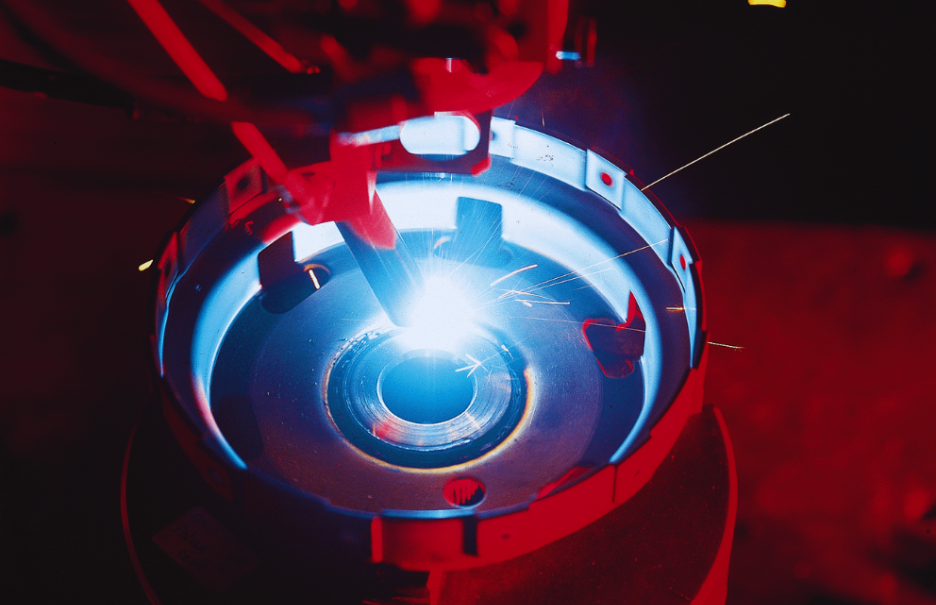
Producing faster without compromise: laser welding and the new challenges facing defence
The ramp-up in defence production is setting new standards for manufacturers: producing more, faster, while maintaining a high level of quality and reliability.
For critical joints, this equation is particularly demanding. The materials are high-performance, the geometries sometimes complex and the qualification requirements high.
In this context, laser welding is a technology particularly well suited to industrialisation challenges, provided the process is mastered as a whole.
Higher throughput without losing control of the process
Laser welding makes it possible to concentrate energy on a very localised area. This characteristic favours narrow, deep welds with a small heat-affected zone and reduced distortion compared with some conventional processes.
For manufacturers, however, the challenge is not just about saving time.
They also need to achieve stable joint quality, control process variability and guarantee repeatability as volumes increase.
It is this ability to reproduce a result that turns a welding technology into a true industrial solution.
Materials and joints that demand process expertise
High-strength steels, aluminium alloys, combinations of different metal grades or multi-material joints (metal-composite in particular): defence applications can involve significant metallurgical and mechanical constraints.
Process development must therefore take the whole system into account: materials, joint geometry, mechanical requirements, throughput, inspection and production environment.
At IREPA LASER, the teams combine expertise in laser processes, materials science, metallurgy, engineering and simulation to address these issues.
When the behaviour of the material or joint still raises uncertainties, an R&D approach makes it possible to overcome technological barriers. And this R&D is directly integrated into a transfer and industrialisation process.
Test, qualify, industrialise
Moving from a first successful joint to repeatable production is a decisive step.
IREPA LASER supports manufacturers through this transition with a structured approach: understanding the need, designing the process, testing, industrialising, producing and training teams.
Trials make it possible to identify the process operating window and define parameters suited to the part and the customer’s requirements.
Once the process is under control, it can be documented, qualified and transferred to the teams or to production equipment.
This continuity avoids a common gap between technological development and industrialisation: the situation where a process works on a few parts but becomes difficult to reproduce as production constraints increase.
Simulation to reduce trials and secure development
The use of laser simulation also makes it possible to go further in understanding and controlling the process.
Thermal simulation can in particular help to anticipate the temperatures reached during welding and how heat spreads through the part.
For sensitive joints, this ability to anticipate thermal phenomena makes it possible to better target trials, limit unnecessary iterations and secure the process definition.
Simulation does not replace experimental validation: it makes it more targeted and more efficient.
Expertise that goes beyond welding
For a defence manufacturer, the challenge is not simply to find a provider capable of producing a laser weld.
It is about having a partner capable of supporting the entire journey: from the initial challenge to production start-up, including the development, qualification and industrialisation of the process.
This is precisely the role IREPA LASER claims as a technology transfer centre: developing and qualifying processes, testing them under real industrial conditions, then transferring the skills needed to master them.
This approach also supports the upskilling of teams, with training tailored to laser welding technologies and the associated safety requirements.
Ramping up production without compromising quality
To meet the new challenges facing the defence sector, ramping up production cannot come at the expense of quality.
Laser welding offers significant advantages in terms of speed, precision and repeatability. But its true industrial value emerges when the process is understood, qualified, documented and transferable.
This is where the combination of technological expertise, R&D, engineering and industrialisation really comes into its own.
Looking to develop, qualify or industrialise a laser welding process for a defence application? Let’s discuss your needs.