Laser micromachining: developing skills to master precision
In aeronautics and space, every design evolution sets the same requirement: lighter, higher-performance parts, without compromising on robustness or reliability.
For design offices and R&D teams, laser technologies open up new possibilities. But to exploit their full potential, you also need to understand what is happening at the level of the material, the beam and the process parameters.
From technological potential to process mastery
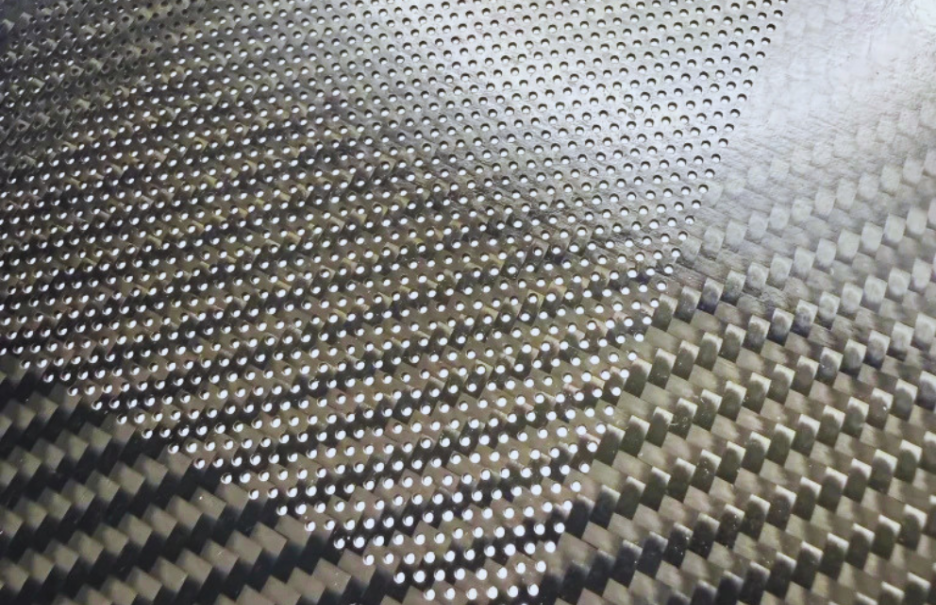
Laser micromachining enables high-precision operations on advanced materials and components. Drilling, micro-cutting, engraving or texturing: every application relies on a controlled interaction between the laser beam and the material.
At this scale, small variations in parameters can have significant consequences on the result. Pulse duration, fluence, overlap rate, number of passes or scanning strategy directly influence the machined depth, surface finish, heat-affected zone and the presence of burrs.
Process mastery therefore does not depend solely on the performance of the laser source. It requires an understanding of the physical phenomena involved and the ability to adapt the parameters to the material and the desired objective.
Training to design and innovate better
These skills are particularly useful for design offices, R&D engineers and technical teams looking to familiarise themselves with the possibilities offered by lasers and to identify new design opportunities.
The aim is as much to understand what is technically feasible as to identify the limits of the process: material properties, behaviour under laser irradiation, achievable precision and optimisation strategy.
The IREPA LASER Micromachining training course thus provides the fundamentals needed to move from knowing the process to mastering it. Participants work in particular on the principles of engraving and micromachining, the influence of operating parameters and optimisation methods.
The course also makes use of industrial laser equipment, including nanosecond and femtosecond sources, so that theoretical knowledge can be tested against the realities of the process.
This approach also makes it possible to step back and consider potential applications and to gain a better grasp of the technological ecosystem surrounding these processes. This is what Jaouher Selmi of Safran Aircraft Engines took away in particular, highlighting that he gained a “better understanding of the laser process and the influential parameters”, as well as a clearer view of existing technologies and their possible uses.
Beyond the process itself, the course also enabled him to identify technology and equipment suppliers, as well as key conferences to continue his technology watch. A particularly tangible benefit in a sector where technologies and industrial solutions evolve rapidly.
Knowledge that is directly useful in an industrial context
Jaouher Selmi’s feedback thus illustrates another aim of training: giving teams the keys to better evaluate available solutions and make the link between technology and industrial needs.
He particularly highlights “the trainer’s level of expertise and passion for the field”, as well as the quality of the explanations, the logical structure of the course and the ability to make sometimes complex concepts accessible. The workshop visits and the practical, application-focused approach were also highlights of his experience.
This combination of understanding the fundamentals, observing the equipment and putting applications into perspective avoids a purely theoretical approach. It gives participants reference points to analyse an issue, talk to suppliers or identify technologies likely to meet their needs.
Making teams more autonomous
The aim is not simply to pass on knowledge about lasers. It is about enabling professionals to reason about their process, identify the decisive parameters and develop the right reflexes when faced with an industrial issue.
For Jaouher Selmi, these skills also translate into his day-to-day work: he says he can “better manage technical teams” and has a “broader perspective for identifying equipment that could be useful” for his company’s needs.
The benefit of technical training is thus also measured in the ability to better support teams, ask the right questions and broaden the range of possible solutions to an industrial issue.
At IREPA LASER, training is delivered by engineers and experts who themselves develop and industrialise laser processes. Courses can be offered on an inter-company or in-house basis, or tailored to the company’s needs, materials and equipment.
For aeronautics and space manufacturers, developing this skill in-house also means gaining autonomy in the design, testing and optimisation phases, and making better use of the possibilities offered by laser micromachining.
It also means giving teams the keys to communicate better with experts and suppliers, evaluate available solutions and more quickly identify those that can meet their industrial challenges.
Training teams today gives tomorrow’s projects the means to go further.