
Manufacturing functional metal parts
Complex geometry, small batch, hard-to-machine alloy: some parts are too expensive to produce conventionally. Laser DED additive manufacturing makes them viable again, as close as possible to final dimensions.
What we can manufacture
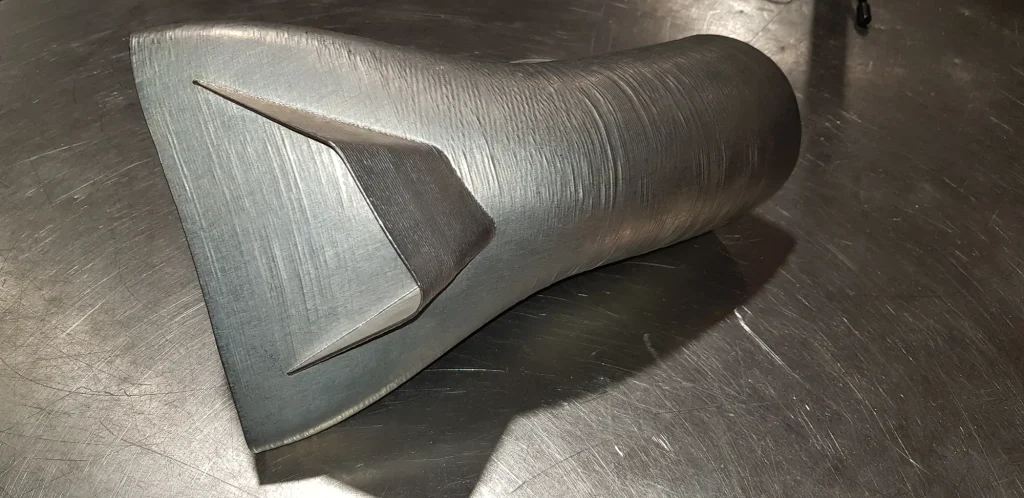
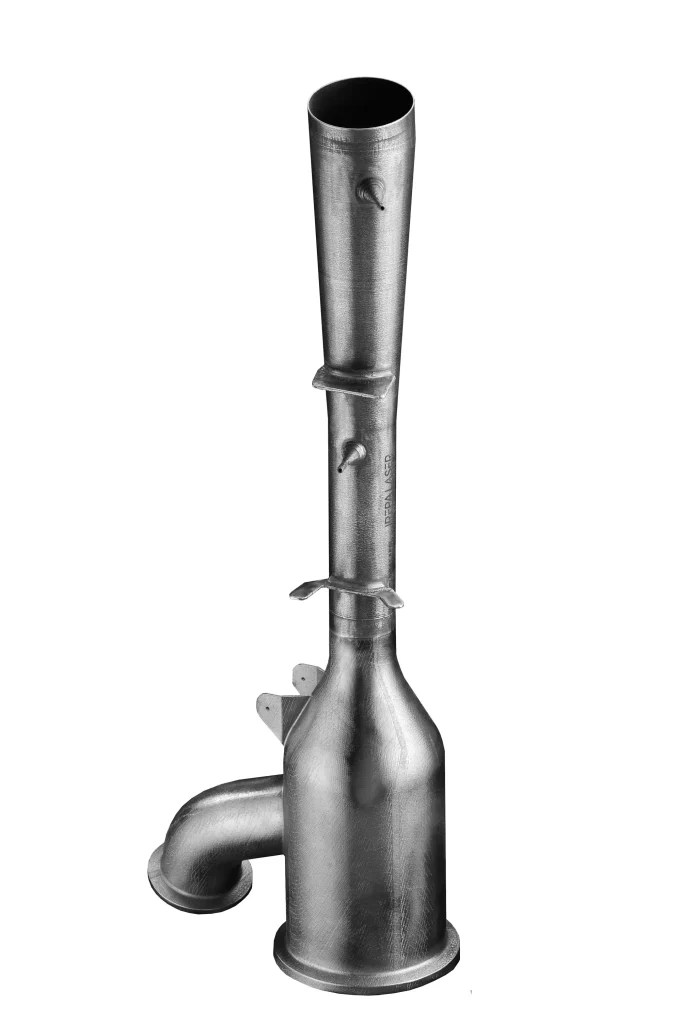
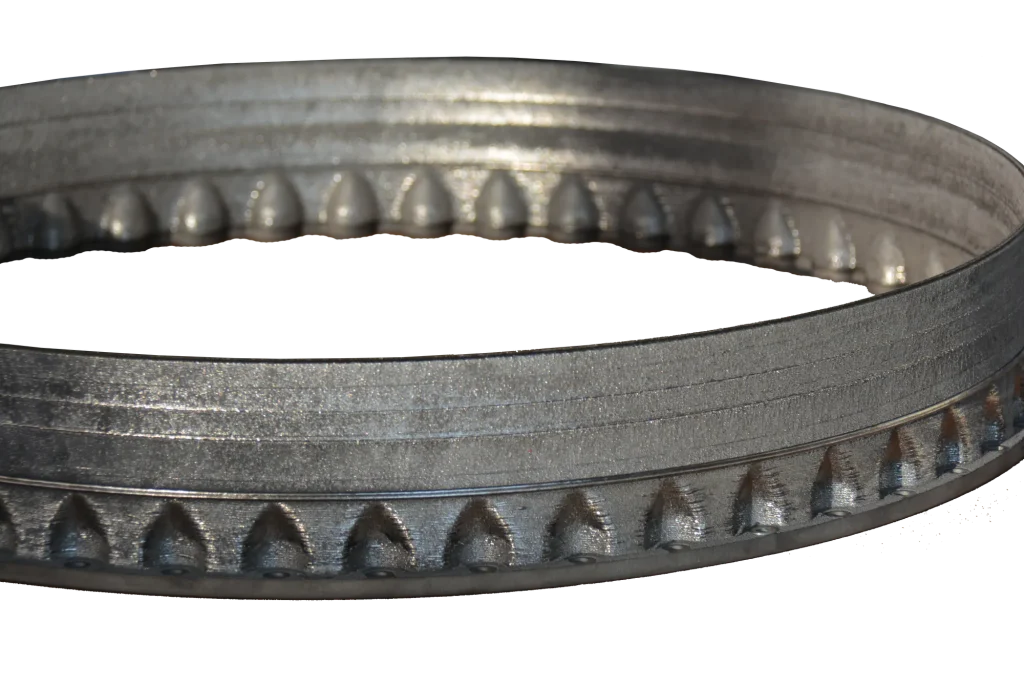
- Near-finished parts incorporating the required volumes and shapes from the outset
- One-off parts and small batches
- Internal geometries and complex shapes
- Machining limited to functional surfaces and critical interfaces only
This approach combines design freedom, mechanical performance and control of finishing costs.
Materials: stainless steels, titanium alloys, nickel-based alloys, aluminium and other specific metal alloys.
Producing directly to near-net shape
For many technical parts, conventional manufacturing involves removing large volumes of material before the final geometry is reached. This results in significant material waste, long machining times and finishing costs that are hard to control, particularly with high-value materials.
Laser DED additive manufacturing, by contrast, builds the required volumes directly, as close as possible to final dimensions. Machining is then reserved for functional surfaces and critical interfaces only, significantly reducing the amount of material removed and manufacturing times.
It is particularly relevant for technical parts made of titanium, nickel-based alloys or other high-value materials.
The sectors we support
Aerospace, energy, automotive and transport, luxury goods and watchmaking: wherever geometry, batch size or material make conventional processes unsuitable.
Feasibility study, process development, trials and validation, quality control, industrialisation and transfer: we step in at whatever stage you have reached, without imposing the rest.
Your questions about manufacturing functional parts by laser DED
It is a metal component manufactured as close as possible to its final geometry, directly meeting the mechanical and functional requirements of its application.
Depending on the application, only functional surfaces and critical interfaces need machining. The rest of the part is manufactured as close as possible to its final geometry.
Laser DED with wire is suited to large parts, while laser DED with powder handles fine, complex geometries. Tell us about your part and we will let you know what is feasible.
A part that conventional machining cannot produce?
Send us your specification and requirements, and we will assess its feasibility in additive manufacturing.