
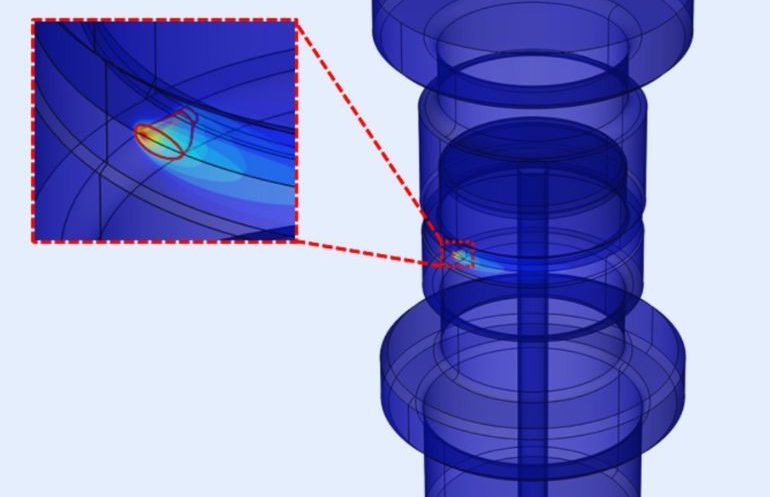
Laser welding and local heating: a major technical challenge to master
Laser welding is renowned for its speed, precision and ability to produce complex joints. However, temperature management during this process remains a crucial issue, particularly when it is applied to sensitive areas such as batteries, electronic circuits or airbag capsules.
Why is temperature control essential?
During laser welding, excessive local heating can lead to several critical risks:
- Ignition or explosion of sensitive materials
- Mechanical distortion compromising the quality and strength of the welds
- Significant reduction in the service life of the assembled components
These phenomena can have serious consequences, both in terms of safety and industrial performance.
How can local heating be limited in laser welding?
To ensure process reliability and safety, several technical solutions are implemented for laser welding:
- Optimisation of laser parameters
Fine-tuning the power, travel speed and focusing of the laser beam reduces the heat input while maintaining optimal joint quality.
- Numerical simulation and thermal modelling
Thermal simulation is an indispensable tool for anticipating the impact of welding on materials. It makes it possible to predict the thermal history, identify critical zones and adapt the process before the experimental phase.
- Real-time monitoring by thermal imaging
Integrating thermal sensors and infrared imaging provides precise temperature monitoring during welding. This makes it possible to adjust parameters instantly and avoid overheating.
Towards safe, high-performance and cost-effective laser welding
Thanks to laser welds and these innovative approaches, it is now possible to control local heating, ensuring robust and reliable welds even on sensitive assemblies. This translates into lower rework costs, better process repeatability and an overall improvement in industrial safety.
Need expert support for your laser welding processes?
At IREPA LASER, our specialists offer you personalised technical support to optimise your processes and ensure the thermal safety of your laser joints.
Contact us for innovative solutions tailored to your industrial constraints: click here