
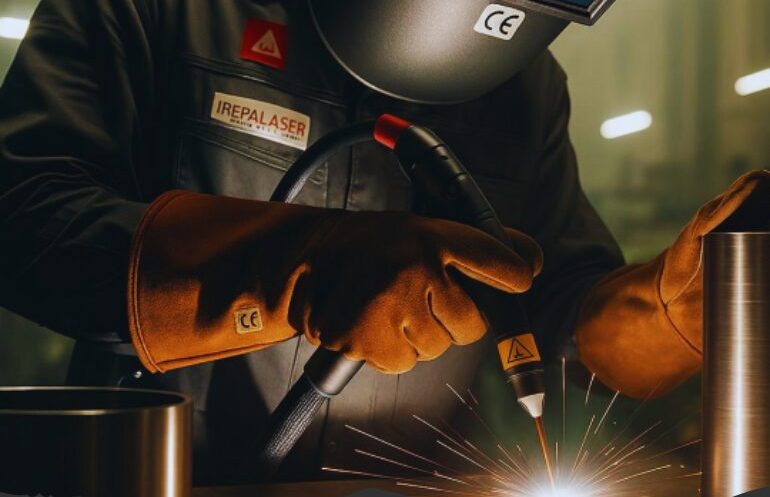
Is laser safety training mandatory? A complete guide to the regulations
The use of lasers in industry, research and education has grown considerably. With this rise, questions surrounding laser safety are becoming central. The most frequent one is also, on the face of it, the simplest: is laser safety training mandatory?
The answer is yes.
But to understand precisely in which cases and in what form, it is necessary to examine the regulatory framework and the practices recognised by the profession.
1. What does the French Labour Code (Code du travail) say about laser safety?
Laser safety is governed by articles R.4452-1 to R.4452-31 of the Code du travail, relating to the risks associated with artificial optical radiation (ROA).
Train exposed employees
Article R.4452-13 requires training appropriate to the level of exposure and the workstation.
Assess laser risks
Articles R.4452-7 and R.4452-8 require a complete and up-to-date assessment of the laser risk.
Comply with exposure limit values (VLE)
Articles R.4452-5 and R.4452-6 define the exposure thresholds that must never be exceeded.
Appoint a Competent Person in Laser Safety (PCSL)
This person is responsible for the risk analysis, the implementation of protective measures and the monitoring of internal procedures.
These obligations apply in all environments where a laser presents a risk, even an occasional one.
2. Why does the notion of “adequate training” cause confusion?
The law requires “adequate” training without precisely defining what it should involve.
This leads to:
- Inconsistent practices between companies,
- Doubts about the compliance of training courses,
- A lack of awareness of the level of training actually required.
To address this lack of clarity, the laser sector has organised itself.
3. PISL, PERL, PCSL: Understanding the CoNSOL training levels.
The Commission Nationale de la Sécurité Optique et Laser (CoNSOL), led by Photonics France, has established a clear structure of training levels, aligned with real-world practice in the field.
PISL – Person Informed about Laser Safety (Level 1)
Short awareness session (often via e-learning) for staff exposed to lasers or laser devices not exceeding class 2.
PERL – Person Exposed to Laser Risks (Level 2)
Benchmark training for operators handling hazardous lasers, including classes 3R, 3B and 4. This is the basic training for any laser user.
RSL – Laser Safety Referent/Officer (Level 3)
Training for people working in controlled laser hazard areas, able to analyse hazardous situations, define safety procedures and include the laser risk in the DUER (single risk assessment document) for all laser classes.
PCSL – Competent Person in Laser Safety (Level 3)
The most comprehensive training, intended for safety referents, HSE officers or technical managers. It enables learners to handle lasers up to class 4 and, above all, to carry out the risk analyses required by the Labour Code.
These training levels, set by the Photonics France federation (the French photonics trade association and legal representative before the authorities), are today the most reliable way of meeting regulatory requirements.
4. Beyond the obligations: why is laser safety training essential?
Laser safety training plays a major role in accident prevention.
The most common incidents occur during critical phases:
- Optical alignment,
- Troubleshooting,
- Maintenance,
- Occasional, non-routine operations.
For employees, training is essential in order to:
- Understand the risks to the eyes and skin,
- Adopt the right practices,
- Select and specify protective equipment,
- Formalise safe procedures.
And for the company, training and prevention make it possible to:
- Ensure safe working conditions for staff,
- Reduce hidden costs,
- Improve performance sustainably,
- Build the image of a responsible company.
A well-trained team significantly reduces the risk of accidents.
5. Who needs laser safety training?
All laser users are concerned by training. Choosing the right training level is essential.
For PISL (Level 1):
- Operators handling lasers of class < 2,
- Operators of enclosed (safe) laser machines,
- Employees working alongside laser applications,
- Visitors or contractors likely to enter a laser area,
- Even a brief visit to a restricted-access area may require PISL awareness training.
For PERL (Level 2):
- Technicians working on laser beams or optics,
- Users of handheld lasers (welding, stripping…),
- Maintenance teams,
- Staff working in an area where a laser hazard may exist,
- Managers and HSE staff,
- Visitors or contractors likely to enter a laser area,
- Lighting engineers and technicians in the entertainment industry.
For RSL / PCSL (Level 3):
- Employers,
- Laser safety referents,
- HSE engineers,
- Maintenance managers.
| Level | Name | Target audience | Risks / Classes |
| Level 1 | PISL | Operators of enclosed machines, visitors | Class < 2 |
| Level 2 | PERL | Maintenance technicians, users of handheld lasers | Classes 3R, 3B, 4 |
| Level 3 | RSL / PCSL | Safety referents, HSE engineers, employers | Risk analysis, all classes |
6. An obligation reinforced since the law of 2 August 2021
The occupational health reform (law of 2 August 2021) strengthens the employer’s responsibility for prevention. It reaffirms the mandatory nature of safety training, particularly for emerging risks such as lasers.
7. Why choose IREPA LASER for your laser safety training?
- A national benchmark
More than 40 years of expertise in laser technologies and laser safety. European leader in laser safety training.
- Compliant with CoNSOL standards
Official training for Competent Person in Laser Safety (PCSL – Level 3) and Person Exposed to Laser Risks (PERL – Level 2)
- Hands-on teaching
Our extensive experience of putting laser safety into practice for our clients and for ourselves enables us to include many very practical examples from various fields (industrial, scientific, entertainment…).
- Expert trainers
Engineers and specialists active in standardisation and safety. All our trainers are CoNSOL-accredited by the PHOTONICS France federation.
- Official recognition
Certificates accepted by the authorities and safety auditors.
- Great flexibility in organising your training
In French or English, by video conference, face to face, on your premises anywhere in Europe and the Maghreb, or by e-learning (PISL – Level 1).
- Fair prices
Our position as Europe’s leading laser safety provider obliges us to guarantee fair and transparent prices while maintaining a high standard of service, both in teaching and in administration.
- Customer satisfaction
In 2025, IREPA LASER trained nearly 1400 people with exceptional overall satisfaction: 99.3% of participants say they were very satisfied or satisfied with their training.
Conclusion
Yes, laser safety training is mandatory as soon as an employee is likely to be exposed to a laser above class 2. For exposure to lower classes, PISL awareness training (Level 1) is required.
But beyond the regulatory obligation, it is an essential tool for prevention, upskilling and making practices safer.
Structuring training into the PISL, PERL and PCSL levels now enables companies to comply effectively with the regulations and to ensure a controlled, safe working environment.
IREPA LASER is your partner for training your employees. Contact us for any information about our training courses or your obligations.
>> Discover our laser safety training courses
>> Choosing the right laser safety training
>> Need further information? Contact us.