
Understanding the dangers of laser exposure: who is at risk?
Exposure to laser risks in establishments open to the public: who is concerned and how to protect yourself?
The use of lasers in establishments open to the public (ERP) such as concert halls, bars and shows has become commonplace to create unique visual atmospheres. However, these devices are not without risk. Misuse or prolonged exposure can pose serious health hazards to those present. It is therefore essential to understand the risks associated with lasers and to implement appropriate protective measures to ensure the safety of the public and professionals.
What are the risks associated with the use of lasers?
The use of lasers in public environments, while aesthetically appealing, requires particular vigilance. Lasers emit concentrated light which can have harmful effects on health if not properly used or controlled.
Laser exposure at shows, in bars and in other ERPs
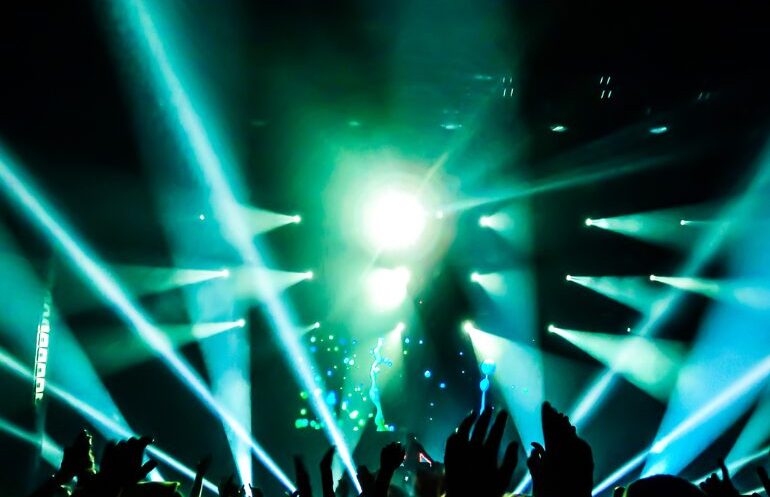
Establishments such as concert halls, nightclubs and bars increasingly use laser devices for their shows. Here are some situations in which laser exposure can occur:
- Shows and concerts: laser lighting effects used to enliven performances.
- Bars and nightclubs: lasers directed at the audience to create a visual atmosphere.
- Outdoor events: use of lasers for visual shows on stage or in the sky.
In these contexts, exposure to laser risks depends on several factors:
- The power of the laser used.
- The distance between the audience and the source.
- The duration of direct or indirect exposure.
These establishments must comply with the regulatory and normative texts in order to limit risks and protect both employees and spectators:
- Articles R.4452-1 to 4452-31 of the French Labour Code (Code du Travail)
- Order of 11 December 2009
- Standards NF EN 60825-1
- Standards NF EN 60825-3
Health hazards: eye and skin risks
The main consequences of laser exposure concern the eyes and skin, the most sensitive areas. Eye risks are particularly worrying because laser light is concentrated on the retina, which can cause irreversible damage.
- Eye risks:
○ Retinal lesions caused by exposure to excessively intense laser light.
○ Temporary or permanent reduction in vision. - Skin risks:
○ Superficial burns caused by prolonged contact with a high-power laser.
○ Skin irritation and redness.
Definition of laser classes according to standard IEC/EN 60825-1
| Types of lasers | Eye hazards | Skin hazards |
| Class 1 | None, except in the event of abnormal use | None |
| Class 1M | Eye hazards if viewed through optical instruments | None |
| Class 2 | Eye hazards in the event of prolonged exposure | None |
| Class 2M | Eye hazards with optical instruments | None |
| Class 3R | Eye hazards in the event of direct exposure | None or low |
| Class 3B | High risks to the eyes | Moderate risks to the skin |
| Class 4 | Very high risks to the eyes | High risk of burns |
Source: INRS – Laser radiation
To prevent these hazards, it is crucial to have a sound knowledge of the lasers in use and to attend specific laser safety training, particularly in the context of ERPs (establishments open to the public).
Safety standards for establishments open to the public (ERP)
Regulations on laser hazards are based mainly on the classification of devices according to their power and use. In ERPs, lasers used for shows or in entertainment settings are often Class 3R, 3B or 4, involving moderate to high risks to the eyes and skin.
Operators of these establishments must comply with strict guidelines on the installation and use of lasers, including criteria such as:
- Setting up exclusion zones to prevent the public from being directly exposed to the beams.
- Using safety devices, such as filter glasses or optical barriers, to minimise risks.
- Clear signage indicating the presence of hazardous lasers.
These points are set out in Chapter IV of the Order of 25 June 1980 approving the general provisions of the safety regulations against fire and panic risks in establishments open to the public (ERP). This text is reinforced by regular inspections and reporting obligations to the competent authorities, thereby ensuring that ERPs comply with safety requirements.
Training for persons exposed to laser hazards (PERL)
To comply with regulations and ensure optimum safety in ERPs, it is essential that staff exposed to laser hazards are properly trained. IREPA LASER offers a specific training course entitled Personne Exposée aux Risques Laser (PERL), accredited by the Commission Nationale de Sécurité Optique et Laser (CoNSOL) of the Photonics France federation.
This training is specially designed for establishments open to the public, such as concert halls, bars, nightclubs and other venues where laser devices are used for entertainment purposes. It enables lighting technicians and stage managers to understand the hazards associated with the use of lasers and to apply good practice to protect staff and the public.
The main objectives of this training are:
- Knowing the risks associated with lasers in ERPs and how to avoid them.
- Mastering the applicable safety standards to ensure the safe use of laser devices.
- Acquiring the skills needed to monitor and control hazardous areas.
Available remotely, this training is an opportunity for professionals to train in laser safety while complying with ERP-specific regulations. All our PERL training courses can include a chapter dedicated to the use of lasers in ERPs.