
Near-net-shape metal blanks
When machining starts from a solid billet, most of the material purchased ends up as swarf. Producing a blank as close as possible to the final geometry changes the equation: you only machine what needs machining.
Two ways to manufacture differently
Building a part with high productivity
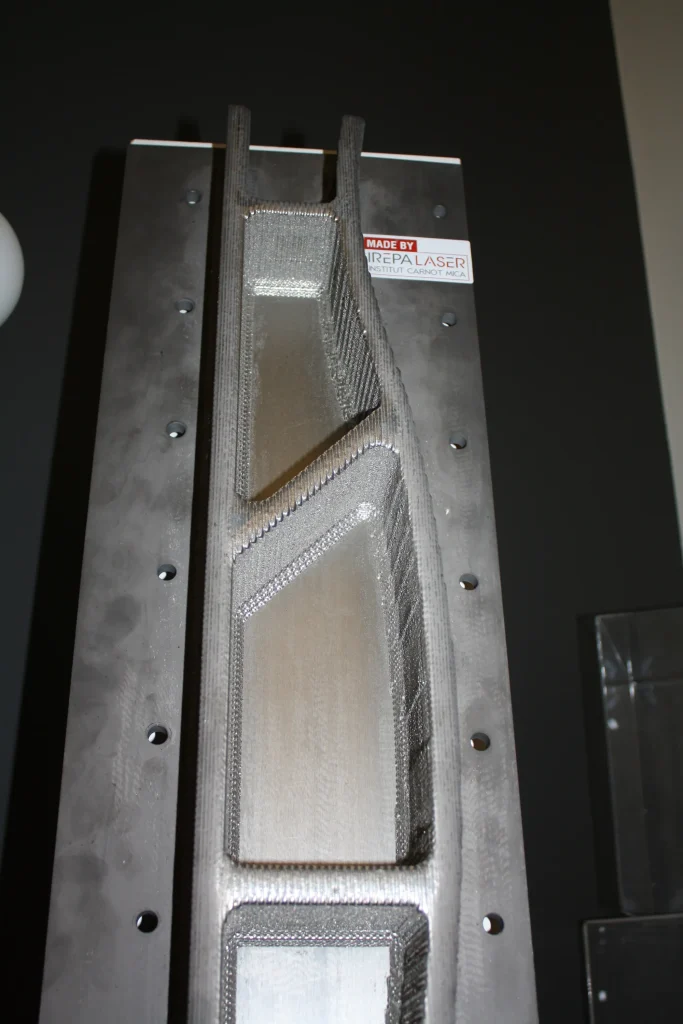
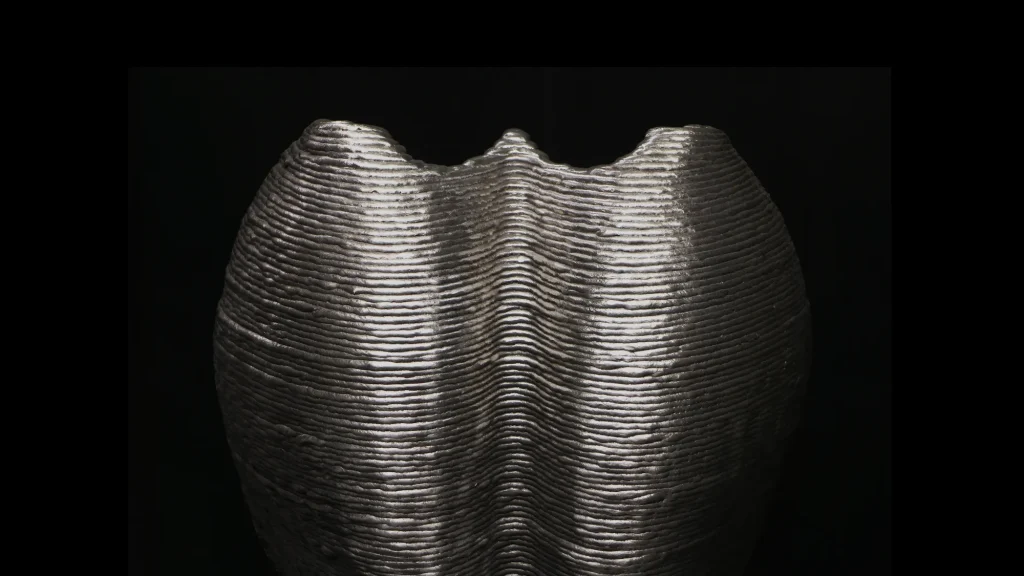
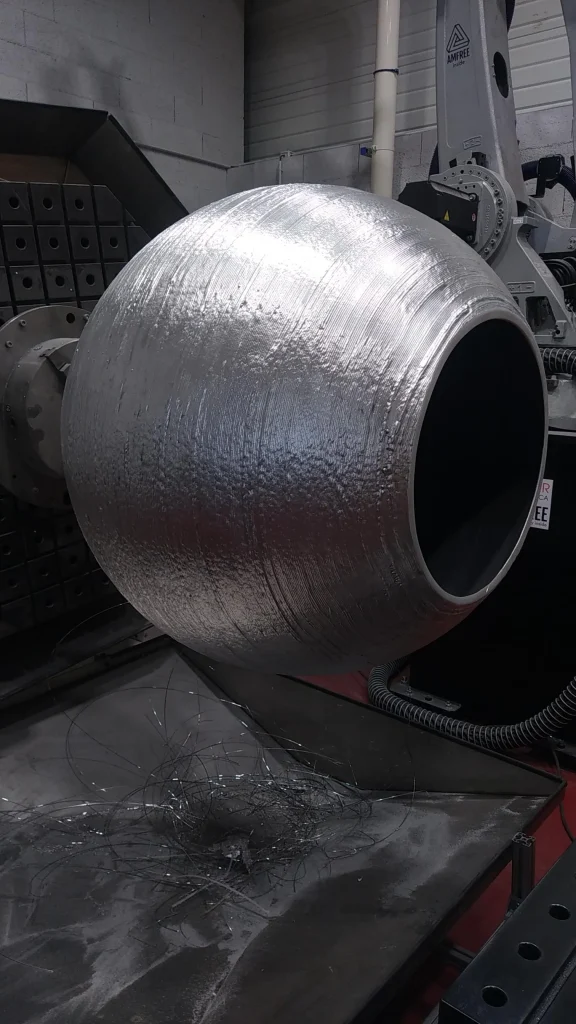
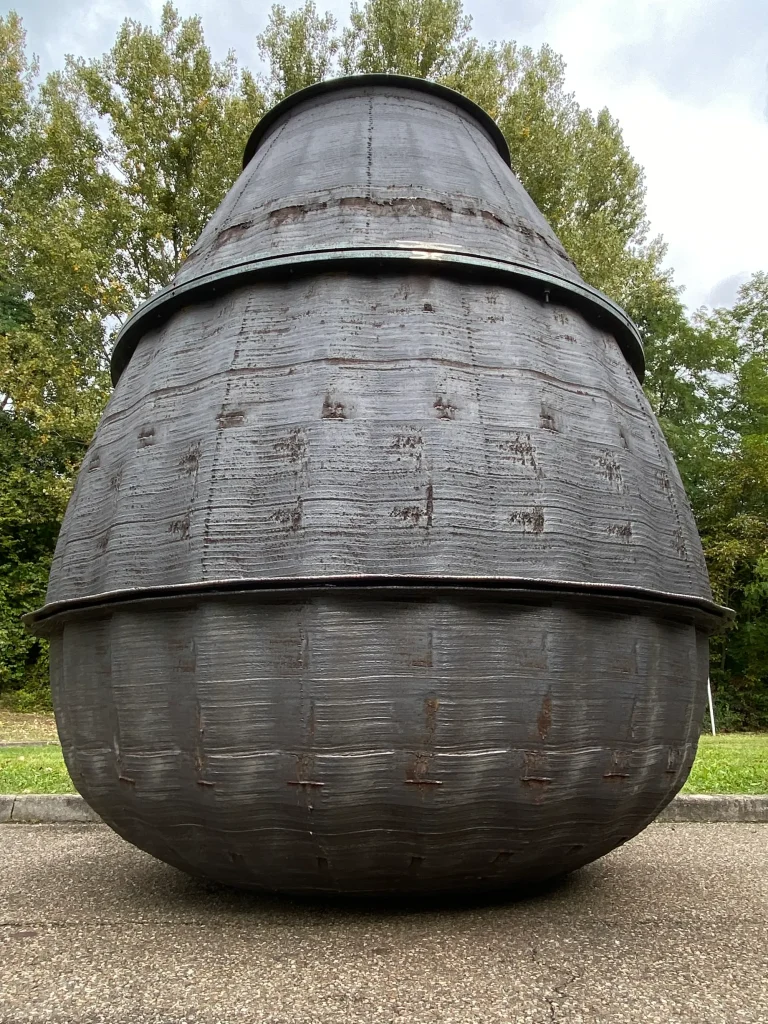
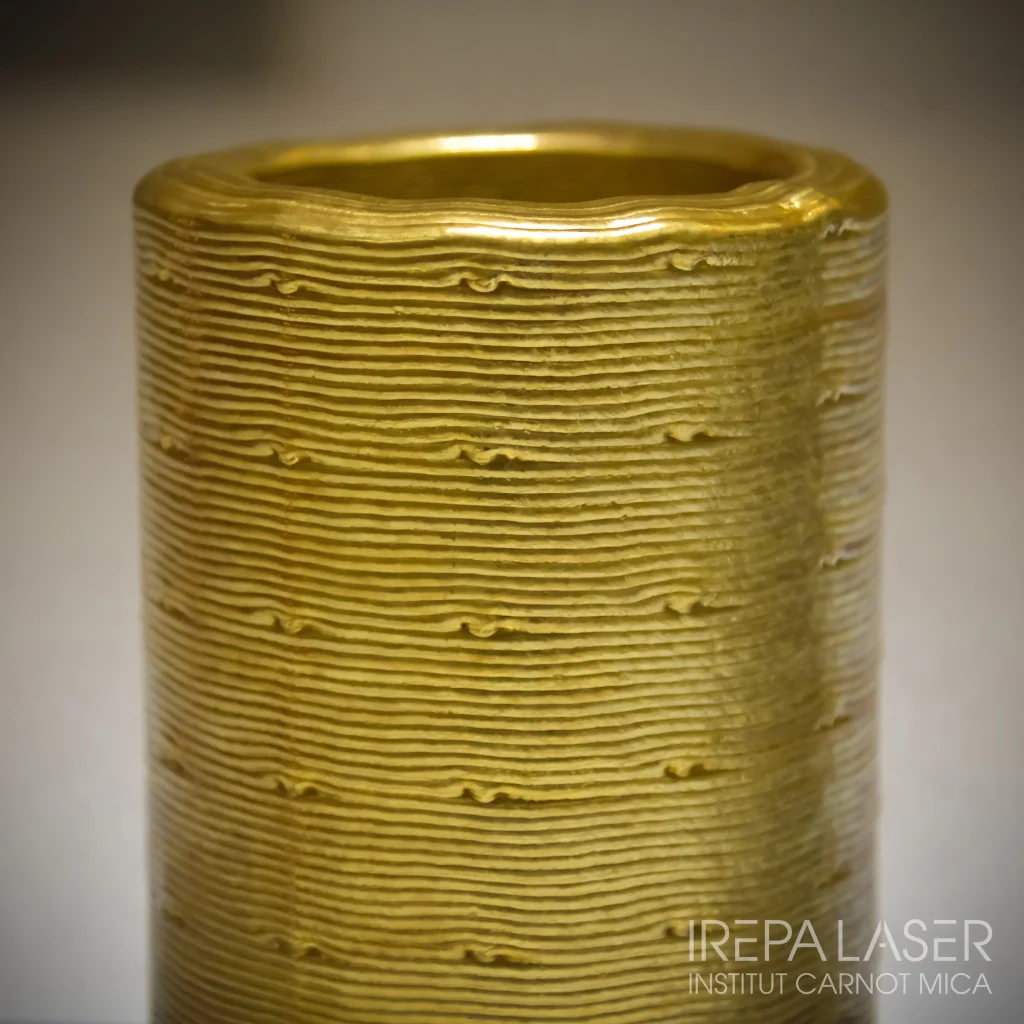
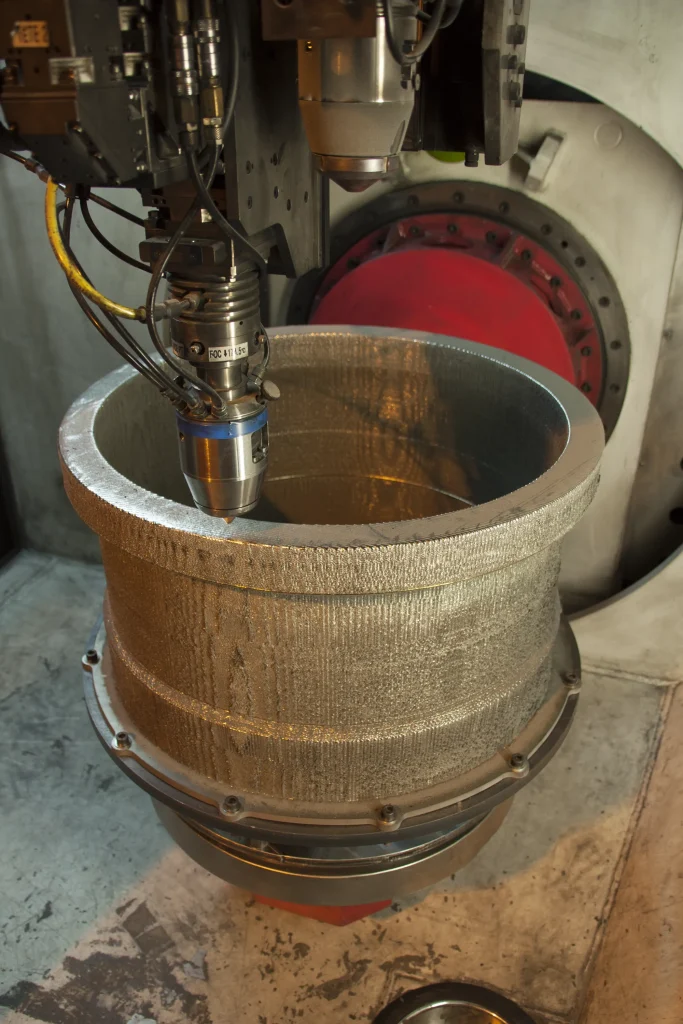
Laser DED can produce large volumes of material directly on a substrate at a high deposition rate.
The substrate can either be retained in the final part or serve solely as a build support.
The part can then be machined to achieve the required dimensions and tolerances.
Adding a function to an existing part
Upgrading a part without remanufacturing it entirely. Laser DED adds material locally where needed to create a new function or modify an existing area: flange, nozzle, bearing surface, boss or other functional addition.
An approach that reduces material consumption, limits machining operations and tailors manufacturing to the part's actual needs.
What we can produce
Laser DED enables manufacturing tailored to requirements, limiting the material to be deposited and the machining operations needed.
- Reduce machined material with deposits close to final dimensions and controlled machining allowances on the areas to be finished
- Manufacture without dedicated tooling for one-off parts and small batches, thereby reducing production start-up costs and lead times
- Upgrade an existing part by locally adding a function or feature: flange, nozzle, bearing surface, boss…
- Make use of high-value alloys by depositing only the material needed, notably titanium, nickel-based alloys, ...
Laser DED wire and powder technologies allow the deposition strategy to be adapted to the material, part dimensions and manufacturing requirements.
What you gain across your manufacturing chain
Laser DED does not just change how the part is manufactured. It can also reduce manufacturing steps, secure material performance and provide greater freedom to develop the product.
- Reduce machining times by depositing material close to final dimensions and limiting the material to be removed.
- Easily evolve designs by modifying shape or dimensions without investing in new tooling.
- Integrate several functions into a single part to reduce the number of components and simplify assemblies.
- Lighten assemblies by eliminating certain joining elements such as screws, rivets or mechanical interfaces.
- Control mechanical performance thanks to a mastered process and metallurgy, producing deposits with characteristics matched to the part's requirements.
The gain is measured across the entire manufacturing cycle: less machining, less assembly, controlled performance and greater flexibility to evolve your parts.
Reducing machined material to cut costs and lead times
For some metal parts, starting from a solid billet means removing a large amount of material before reaching the final dimensions.
The larger the part or the more costly the material is to machine, the more significant machining times and the associated costs can become.
Laser DED deposits material only where it is needed, producing a blank close to the required dimensions. Machining then focuses mainly on surfaces requiring finishing or specific tolerances.
This approach reduces the volume of material to be removed, machining times and manufacturing costs, while making the most of high-value materials such as titanium or nickel-based alloys.
From feasibility study to industrial transfer
Feasibility study and consultancy, parameter development and optimisation, trials, prototypes and process validation, one-off or small-batch production, quality control, industrialisation and transfer: we step in at whatever stage you have reached.
The sectors we support
Aerospace, defence, energy and hydropower, naval, tooling: wherever material is costly and machining weighs on lead times.
Feasibility study, process development, trials and validation, training, industrialisation and transfer: we step in at whatever stage you have reached, without imposing the rest.
Your questions about manufacturing near-net-shape blanks for machining
Laser DED manufactures a metal part by material deposition, starting from a substrate or an existing base.
Material is deposited as close as possible to the required dimensions; surfaces requiring specific tolerances or surface finishes can then be machined.
Tolerances depend on the material, part dimensions, deposition strategy and functional surfaces. A thermomechanical simulation can be carried out beforehand to predict the residual stresses and distortion generated during deposition.
This IREPA LASER expertise makes it possible to optimise the manufacturing strategy, limit geometric deviations and define the machining allowances needed for finishing. Functional surfaces can then be machined to the expected tolerances and surface finishes.
Yes. Mastery of the process and metallurgy produces deposits with mechanical characteristics suited to the requirements of many industrial applications. Manufacturing parameters are defined and validated according to the material and the performance expected of the part.
Yes. When the part requires machining, we can incorporate your manufacturing constraints from the design of the deposition strategy onwards. We work with your manufacturing engineering team or your machinist to define a part that fits directly into your production routing.
A part to manufacture differently?
Send us your geometry, material and manufacturing requirements. Together we will determine the most relevant laser DED strategy, from manufacturing the part through to any post-processing operations.